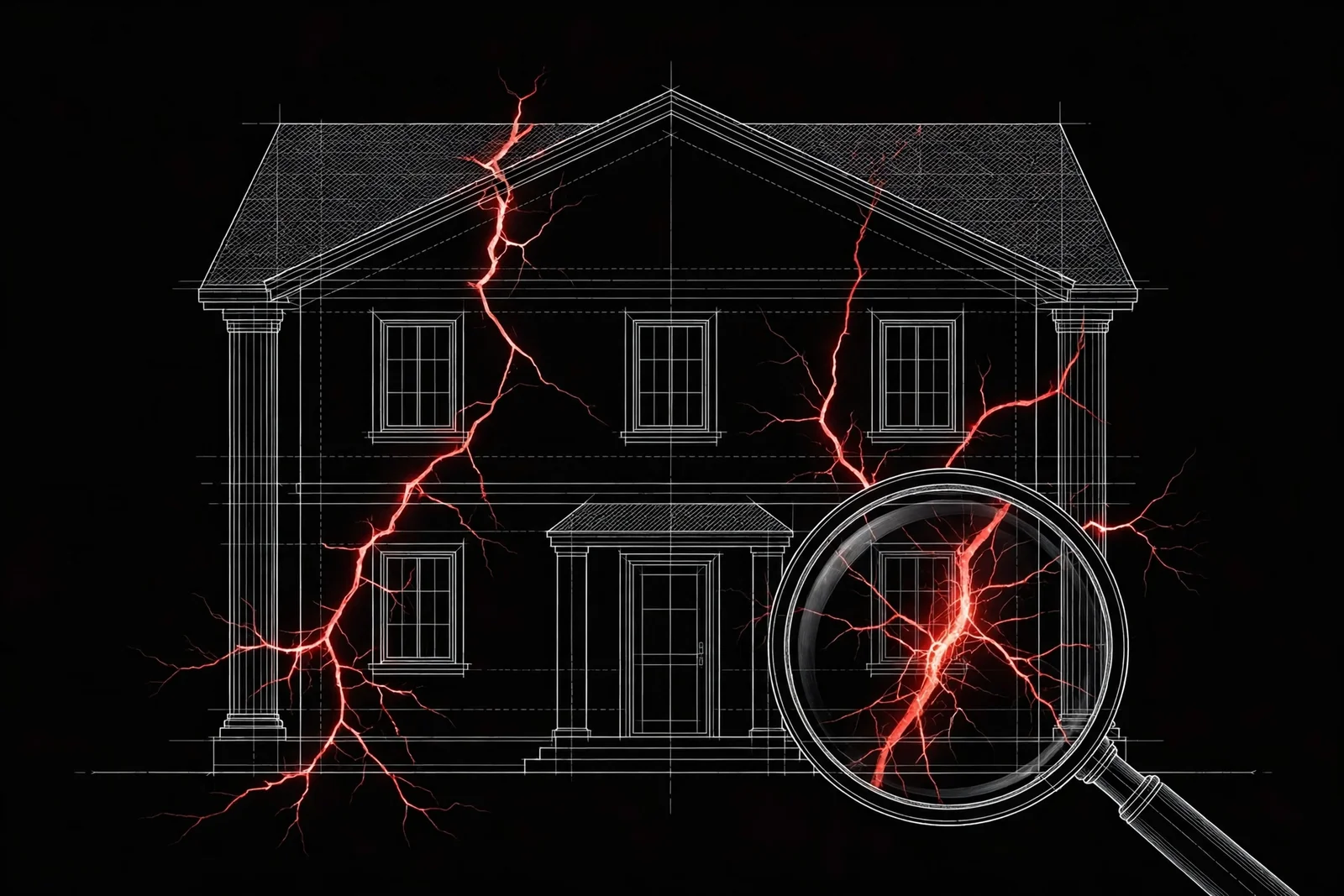
Seeing a crack in a new house is worrying, and it is one of the most common complaints homeowners bring to us. Some cracks are only in the plaster and are mostly cosmetic, but many trace back to decisions made before the first brick was laid. Here are five structural design mistakes that cause cracks in houses — and how to avoid every one of them.
Mistake 1: Building Without a Structural Design
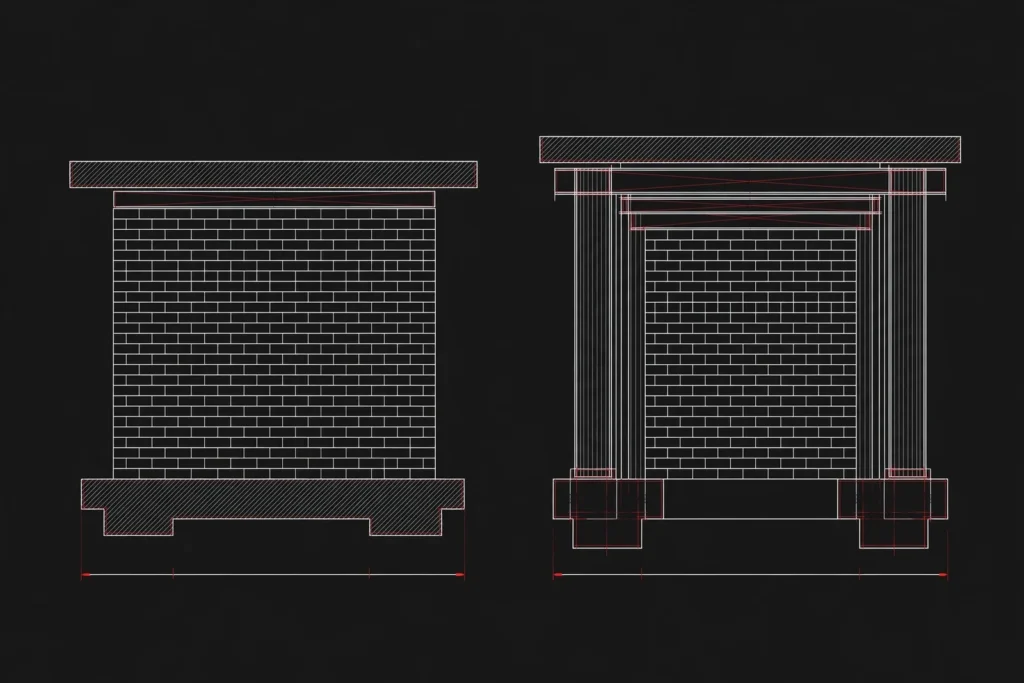
Many houses are built on a contractor’s thumb rules: standard column sizes, a familiar amount of steel, the same footing size used on the last project. The problem is that thumb rules cannot calculate. Your spans, your soil and your loads are different from the house next door, so a copied recipe can leave beams too weak or columns overloaded. The result shows up as sagging slabs, cracks in beams and walls that keep reappearing after repair. The fix is simple: have the structure of your house actually designed — foundations, columns, beams and slabs calculated for your plot and your layout — before construction starts.
Mistake 2: Guessing the Foundation
The foundation is the one part of your house you cannot see or easily repair, yet it is often sized by guesswork. If footings are too small for the soil, or one part of the house sits on firm ground and another on filled or soft soil, the building settles unevenly. Uneven settlement is a classic cause of diagonal cracks, especially near door and window corners, along with doors that start sticking. Foundations must match the bearing capacity of your soil, and on doubtful plots a soil test — or at least an experienced engineer’s assessment — is money well spent. Guessing here is the most expensive guess in the whole building.
Mistake 3: Changing the Design on Site
A column moved “a little” to fit a room, a wall removed from under a beam, the staircase shifted, a slab extended during construction — small changes on site can completely change how loads travel through the frame. The structure was calculated as a system; altering one part without rechecking the rest can overload members that were never meant to carry that load, and cracks follow. Site changes are sometimes necessary, but they should always be approved by the designer first. A quick phone call before the change is far cheaper than repairs after it.
Mistake 4: Poor Concrete Quality and No Proper Curing
A structural design assumes the concrete will reach a certain strength. On site, that strength is easily lost: too much water in the mix, dirty or poorly graded sand, too little cement, no proper vibration, and concrete left to dry without curing. The result is weak, shrinkage-prone concrete that shows fine map-like cracks, dusty surfaces and early deterioration — and in serious cases, members that cannot carry their design loads. Good design must be matched by basic site discipline: the correct mix, clean materials, proper compaction and keeping the concrete moist while it gains strength.
Mistake 5: Overloading the Structure Later
Your house was designed for a stated number of floors and certain loads. Problems begin when an extra floor is added years later, a heavy water tank is placed on a roof that was not designed for it, or a room is converted to a use with much heavier loads — all without checking the frame and foundations below. The original structure has no spare capacity for loads nobody told the designer about. Before adding a floor or a heavy load, have the existing design reviewed by a structural engineer. And if you already see cracks that are wide, growing, or passing through beams and columns rather than just plaster, do not just fill them — get the structure inspected, because those cracks are the building asking for help.
Get a FREE Quote
Every design at Pak Structural is checked by a qualified structural engineer, so your house is designed right from the foundation up. Send us your architectural drawings on WhatsApp at +92 304 4836662 and we will give you a FREE quote for your project — no cost and no commitment. You can also email us at info@pakstructural.com or request your quote here: https://pakstructural.com/get-quote/