The foundation is the part of your house you will never see again once it is built — and the part that is hardest and most expensive to fix if it goes wrong. Choosing the right foundation type depends mainly on your soil, the size of your building, and the water level on your plot. This guide explains the common options in simple words, so you can talk to your engineer with confidence.
Why the Foundation Matters So Much
Every wall, column and roof of your house finally rests on the foundation. Its job is to spread the weight of the building safely into the ground. If the foundation is too weak or the wrong type for your soil, the building can settle unevenly. That shows up as cracks in walls, doors that stop closing, and floors that slope. Good foundation design prevents these problems before construction even starts.
Isolated Footings: The Most Common Choice for Houses
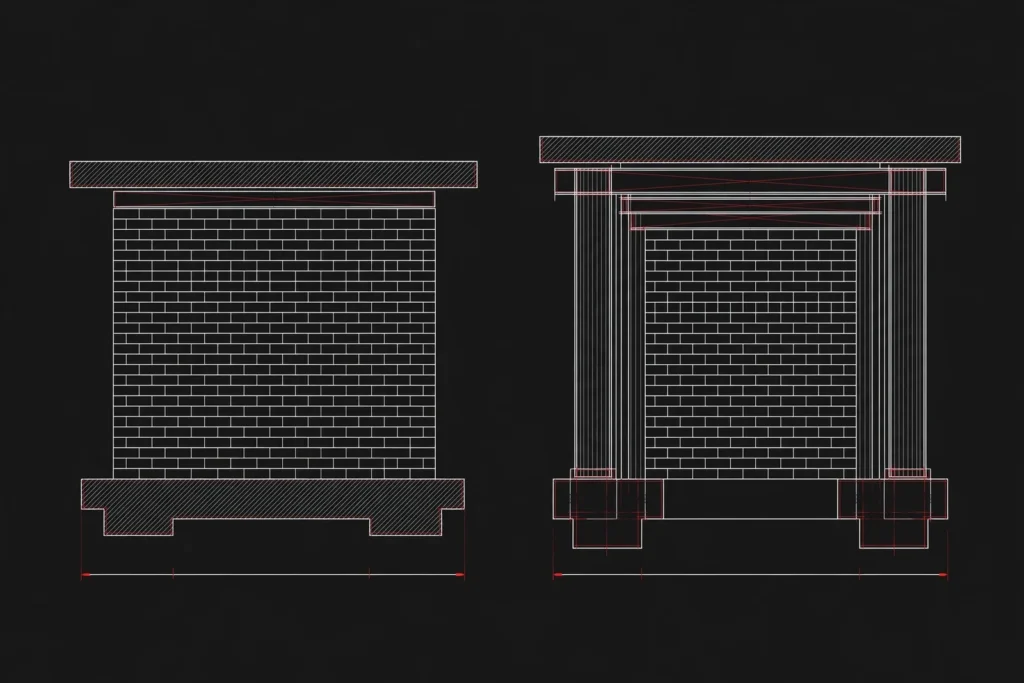
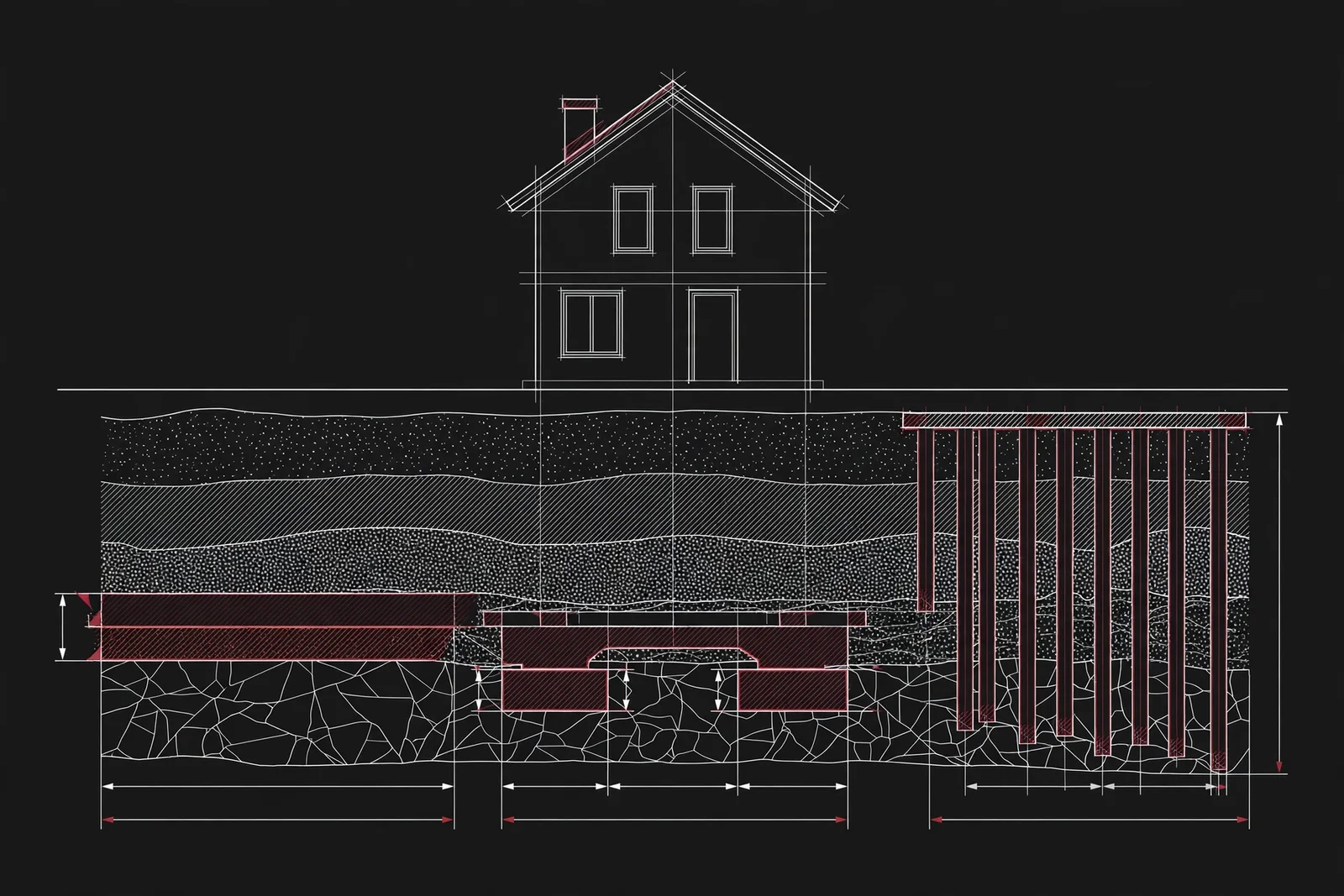
For most single and double storey houses on decent soil, engineers use isolated (pad) footings. Each column of the house stands on its own square or rectangular block of reinforced concrete below ground. The blocks are connected by plinth beams, and the whole system is simple, economical and easy to build. Isolated footings work well when the soil has good bearing capacity and the columns are not too close together. They are the standard choice for RCC frame houses across Pakistan.
Strip Foundations for Load-Bearing Walls
Older and smaller buildings often carry their weight through the walls themselves instead of columns. In that case, a strip foundation is used — a continuous strip of concrete running under each load-bearing wall. It suits one-storey construction and masonry structures where loads are light and spread evenly along the wall. If you are planning more floors later, however, an RCC frame with isolated footings is usually the safer long-term choice.
Raft Foundations: When the Soil Is Weak
If your plot has soft, filled or weak soil — common in low-lying areas and near old ponds or drains — individual footings may need to be so large that they almost touch each other. Then a raft (mat) foundation makes more sense: one thick reinforced concrete slab under the whole building, spreading the load over the full area like a raft floating on water. Rafts also help where the water table is high or where different parts of the soil are uneven in strength.
Pile Foundations: For Tall Buildings and Very Poor Ground
When the surface soil is too weak even for a raft, piles carry the building down to a stronger layer deep below. Piles are long concrete columns driven or bored into the ground, and the building stands on them. Piling is more expensive and needs special equipment, so it is mainly used for multi-storey buildings, heavy structures, or plots with very poor soil near rivers and reclaimed land. For a normal house it is rarely needed, but for the right project it is the only safe option.
How to Choose: Soil, Floors and Water
Three questions decide the foundation type. First, what is your soil like? A simple soil test (bearing capacity test) on your plot gives the engineer the number the whole design depends on — never skip it. Second, how many floors will the building have, now and in the future? Heavier buildings need stronger foundations. Third, how deep is the water table? High water affects excavation, concrete quality and long-term durability. Share your plot size, location and floor plan with a qualified structural engineer, who will check these factors and recommend the right type — guessing from a neighbour’s house is risky, because soil can change from one street to the next.
Get a FREE Quote
Every design at Pak Structural is checked by a qualified structural engineer, so your foundation is designed for your plot and your soil — not copied from someone else’s house. Send your drawings on WhatsApp +92 304 4836662 and get a FREE quote, or visit https://pakstructural.com/get-quote/ to send your project details online. You can also email us at info@pakstructural.com.