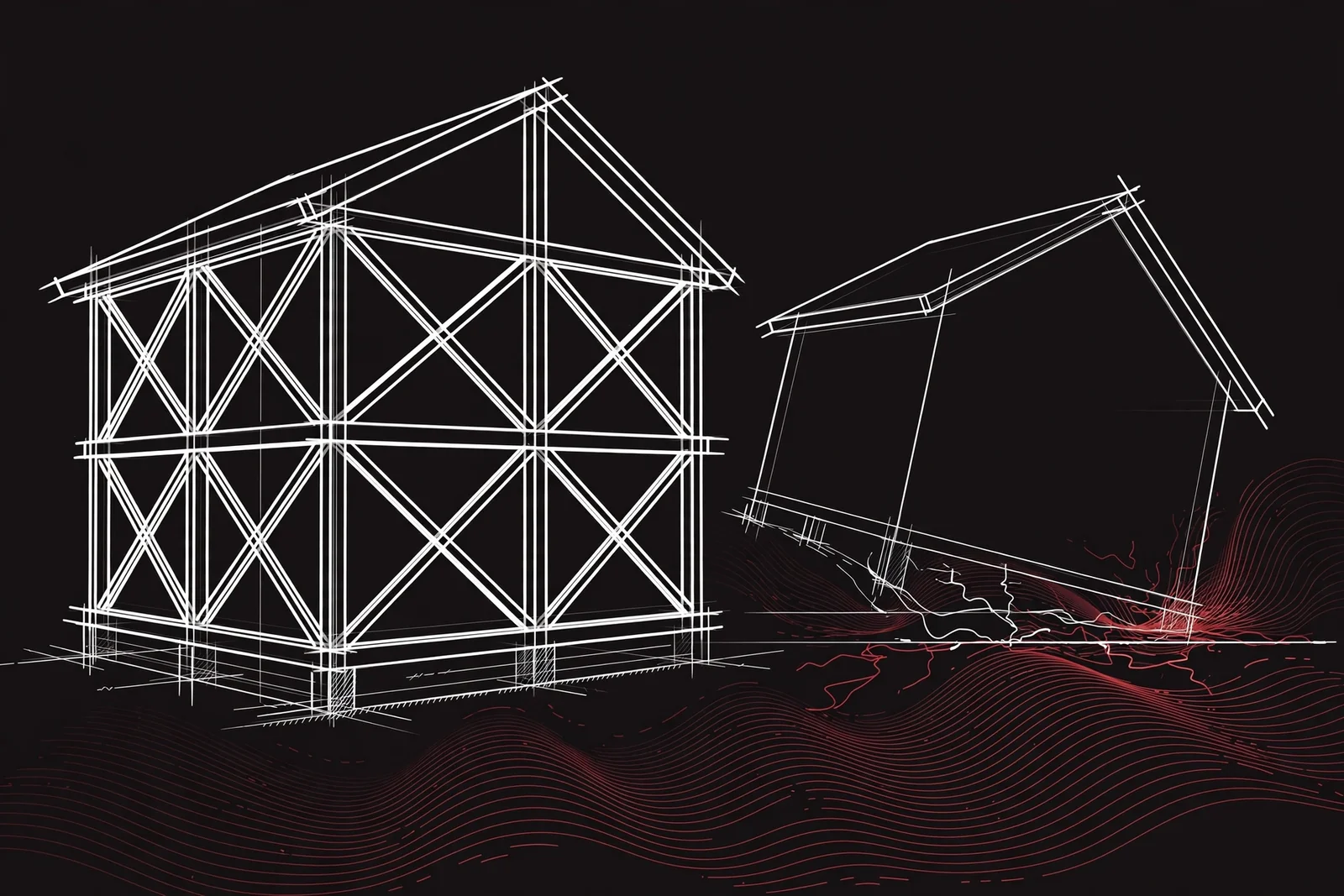
Many parts of Pakistan lie in earthquake-prone regions, and even areas far from the mountains can feel strong shaking. The good news is that ordinary houses can be designed to ride out an earthquake without collapsing — the secret is not extra expense, but correct design and detailing. Here are seven features your structural engineer builds into an earthquake-resistant home.
1. A Regular, Symmetrical Plan Shape
Earthquakes punish irregular buildings. Houses with a simple, regular shape — roughly rectangular, with walls and columns arranged symmetrically — shake evenly and predictably. Complicated L-shapes, sudden setbacks and one very heavy corner twist during shaking and crack at the joints. If you love an irregular design, an engineer can still make it safe with properly placed separation joints and extra care — but a regular plan is the cheapest safety you will ever buy.
2. A Complete, Connected Frame
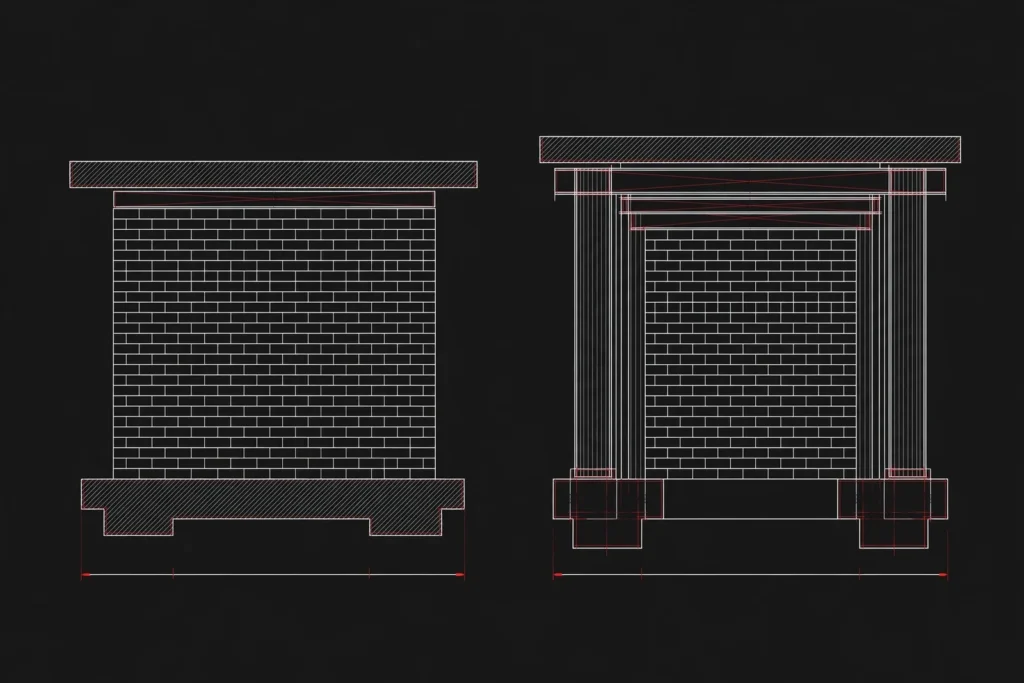
In an RCC frame house, columns, beams and slabs must act together as one box. Every beam should connect into columns, every column should continue down to the foundation, and there should be no “floating” columns resting on a beam halfway up. During an earthquake the whole frame sways as a unit; a break in that chain concentrates damage exactly at the weak link. This continuity is decided on the drawing board, not on site.
3. Ductile Detailing: Steel That Bends, Not Breaks
Concrete is strong in compression but brittle. Steel reinforcement gives the frame ductility — the ability to bend and absorb energy without suddenly collapsing. Ductile detailing means closely spaced stirrups (rings) near beam and column joints, proper hooks at bar ends, and correct lapping of bars away from the most stressed zones. On drawings these details look like small extra bars; in an earthquake they are the difference between repairable cracks and a pancake collapse.
4. Strong Joints and Proper Anchorage
Beam-column joints are the hardest-working points in the frame during shaking. They need enough concrete size, well-anchored bars passing through, and dense stirrups inside the joint itself. Bars that simply end at a joint, or columns too small for the beams framing into them, are classic failure points seen after earthquakes. A qualified engineer sizes joints and anchorages to the building code — this is never an area to economise.
5. Light Roofs and Controlled Weight
The heavier a building is, the harder an earthquake shakes it — the force is directly related to the weight. Keeping the structure sensibly light helps: avoid unnecessary heavy masonry on upper floors, heavy water tanks placed without design, and thick decorative elements on the roof. Weight that the house does need should sit low and symmetrically, and heavy items like overhead tanks must be part of the structural design, properly supported and anchored.
6. Foundations Suited to the Soil
Earthquake safety starts below ground. Soft or filled soil can amplify shaking and settle unevenly, so the foundation must suit the actual soil on your plot — isolated footings, a raft, or tie beams connecting all footings so the base moves as one unit. Plinth beams are especially valuable: they hold the base of the house together and stop individual footings from drifting apart. A simple soil test before design is money well spent.
7. Good Construction Quality and Supervision
Even the best earthquake design fails if it is built badly: wrong bar spacing, poor concrete mixing, too little curing, or stirrups quietly omitted. Use the steel and concrete grades written on your drawings, keep the specified cover to bars, and have the frame inspected before each slab is cast. These general principles make a real difference, but they never replace a design checked for your plot and your building — always have a qualified structural engineer design and check your actual home.
Get a FREE Quote
Every design at Pak Structural is checked by a qualified structural engineer, with earthquake-resistant detailing suited to your plot and your city. Send your drawings on WhatsApp +92 304 4836662 for a FREE quote, or visit https://pakstructural.com/get-quote/ to send your details online. Email: info@pakstructural.com.